Kalamata olives seem simple until you start comparing them. Prices vary. Quality varies. Even the flavor changes depending on how the olives are handled. The biggest driver of these differences is the official Greek size grade, which determines the olive’s flesh, oil content, and overall eating experience.
Today we are talking only about Kalamata olives with the pit still intact. These are the traditional style, and they offer the most flavor and the highest quality.
Why Kalamatas With the Pit Taste Better
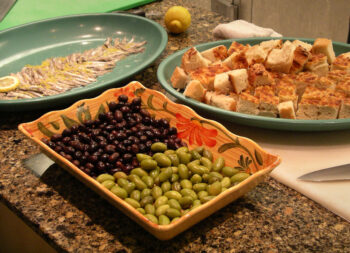 The pit acts like a natural flavor anchor. It helps the olive hold on to its oils and structure. When olives are pitted, especially when they sit in brine, the oil and flavor move out of the olive and into the liquid, while the brine’s flavor moves into the olive.
The result is a flatter, less expressive olive. This is why producers, traditional markets, and olive connoisseurs prefer Kalamatas with the pit.
Understanding Greek Kalamata Size Grades
 For Kalamata olives with the pit, the Greek government recognizes 11 to 12 official size grades, based on how many olives fit into one kilogram. Fewer olives per kilogram mean the olives are larger.
Larger Kalamatas tend to have:
- More flesh relative to the pit
- Higher natural oil content
- Richer flavor
- A satisfying, meaty texture
These qualities make the larger grades more valuable and more expensive at the source.
The Size Caputo’s Carries: Colossal
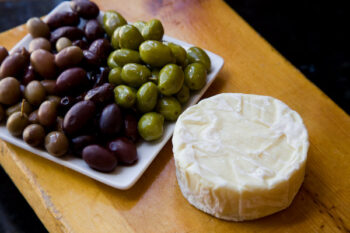 Caputo’s carries Colossal Kalamata olives, which fall into the 121 to 140 pieces per kilogram range. This is the second-largest size generally available.
Here is the full scale for context:
- Super Colossal (111–120 pieces/kg) — almost never available
- Colossal (121–140 pieces/kg) — what Caputo’s carries
- Giants (141–160 pieces/kg)
- Extra Jumbo (161–180 pieces/kg)
- Jumbo (181–200 pieces/kg)
- Extra Large (201–230 pieces/kg)
- Large (231–260 pieces/kg)
- Superior (261–290 pieces/kg)
- Brilliant (291–320 pieces/kg)
- Fine (321–350 pieces/kg)
- Bullets A (351–380 pieces/kg)
- Bullets B (381–420 pieces/kg)
Most retailers offer Jumbo at best, which is three size grades smaller than Colossal.
How Caputo’s Offers Better Value on Larger Olives
Despite carrying larger, more expensive olives, we are often able to match or beat competitor pricing. Three factors make this possible:
- Direct relationships with Greek importers, which allow us to purchase high-grade fruit at better prices.
- Buying in meaningful quantities, which reduces per-unit cost.
- Choosing industrial 26.4 pound containers, which minimize packaging waste before the olives even reach our stores.
These efficiencies allow us to pass real savings on to our customers while offering a better olive. And while we buy in large containers, we sell by weight, so you can purchase any amount you want, from a small taste to a full party spread.
Our Commitment
We aim to offer the best version of any product and still keep it accessible. With Kalamata olives with the pit, that means:
- Larger olives
- Higher natural oil content
- Fuller flavor
- Better texture
- Strong value
 If you have ever wondered why our Kalamatas taste different, now you know. Size matters. And keeping the pit matters even more.
— Matt Caputo
FAQ: Kalamata Olive Sizes, Quality, and Value
What is the difference between Colossal and Jumbo Kalamata olives?
Colossal Kalamatas fall into the 121–140 pieces per kilogram range. Jumbo olives fall into the 181–200 range. Colossal olives are larger, more flavorful, and contain more natural oil.
Why are some Kalamata olives more expensive?
Larger olives cost more to grow, sort, and pack. They also have higher oil content and richer flavor, which increases both demand and price.
Are Kalamata olives with pits better than pitted olives?
Yes. The pit helps the olive retain oil and flavor. Pitted olives lose flavor to the brine and absorb the brine’s flavor in return.
Why is Caputo’s pricing competitive if your olives are larger?
Our pricing benefits from direct importer relationships, meaningful purchase quantities, and low-waste 26.4 pound containers, even though customers can buy any amount they want.
Which Kalamata size is best?
Many producers and olive experts consider Colossal the ideal balance of flavor, oil content, and size.