Two questions came up during a recent Virtual Hang, the Zoom tasting our sister company A Priori Specialty Foods hosts for wholesale buyers. More than 60 professional tinned fish buyers had samples of Olasagasti anchovies open in front of them.
The first question: why do these anchovies need to be refrigerated? The second: why does the 120g tin cost more than three times as much as the 48g tin, when it holds only two and a half times the fish?
Both questions have the same answer, and it starts in the water. The short version: same fish, different sea. We gave the room the quick version of the anchovy class we teach at Caputo’s. Here it is, written down.
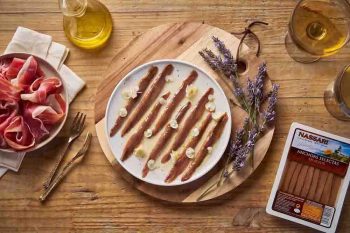
Same Species, Different Fish
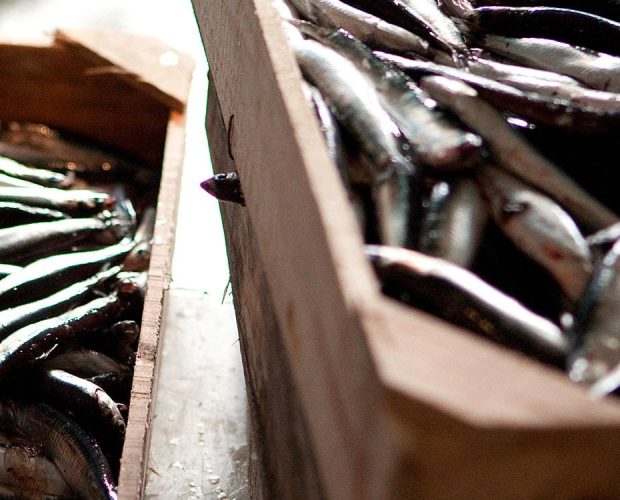
There are well over 100 species of anchovy in the world. The one that matters most in European kitchens is Engraulis encrasicolus, the European anchovy. It is a small, oily fish, five to six inches long, silver with a blue-green back, and a close cousin of the sardine.
The anchovy swimming off Sicily and the anchovy swimming off the Basque coast are the same species. They are not the same fish.
Wine people call the influence of place terroir. For seafood, the word is merroir. Anchovies are one of the clearest examples of it we know.
Why the Cantabrian Sea Grows a Different Anchovy
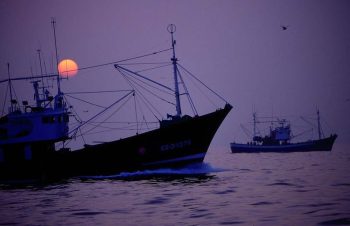 The Cantabrian Sea is the southern edge of the Bay of Biscay, the stretch of Atlantic along Spain’s northern coast. It is colder than the Mediterranean. Strong currents bring cold, nutrient-rich water up from the deep, and those nutrients feed heavy blooms of plankton. Plankton is what anchovies eat.
The water is also rough and well oxygenated. Anchovies living there swim hard against strong currents every day of their lives.
The simplest way we have found to explain the result: picture two athletes with identical genetics. One eats a rich diet and trains hard every day. The other eats less and trains less. The first one grows bigger, more muscular, and carries more fat. That is the Cantabrian anchovy.
That fat and that firm muscle are not only about flavor. They are what a long salt cure needs. During more than a year in salt, the fish is transformed much the way a ham becomes prosciutto. A lean, soft fish has less to give that process. A fatty, dense one has everything.
The Spring Window
Timing matters as much as place. The Cantabrian anchovy season peaks in spring, from March into June, when the fish are fattening up before spawning. Fish caught outside that window start the cure at a disadvantage that no amount of skill can fix later.
Fillet Size Is Where You Can See It
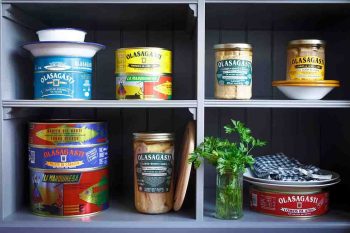 This is where the second buyer question gets its answer. Every anchovy Olasagasti packs comes from the Cantabrian Sea. Within that catch, though, fish still vary in size, and the biggest fish make the biggest fillets.
The Olasagasti 48g tin is the size most people want, and it is a good place to start. But it is a small tin, and only small fillets fit inside it.
The Olasagasti 120g tin is wider and longer while staying just as flat. It is packed with hand-selected fillets from Olasagasti’s largest, best fish. You are not only paying for more anchovy. You are paying for different anchovy.
The flavor difference is hard to overstate. The closest comparison we know is prosciutto. A food service prosciutto and a 24-month Dok Dall’Ava Prosciutto di San Daniele are both cured pork legs. Nobody who tastes them side by side thinks they are the same thing.
For kitchens that go through anchovies quickly, the Olasagasti 1K chef tin holds a mix of small and large fillets from the same Cantabrian catch. On average they run larger than the fillets in the 48g tin and smaller than the hand-selected fillets in the 120g. It is the tin we reach for when anchovies are going into a sauce, a dressing, or onto a pizza in quantity.
The Label Does Not Always Say Where the Fish Swam
Santoña, on the Cantabrian coast, is famous for its anchovies. It is perfectly legal to label anchovies “produced in Santoña” when the fish were caught off Morocco, Argentina, or Chile. The curing happened in Cantabria. The fish did not grow there.
We have the same conversation about olive oil and balsamic vinegar. A place name on a label tells you where something was processed, not always where it came from. Traceability comes from knowing the producer and how they source.
A Sicilian Craft on a Basque Coast
Most people assume Cantabrian anchovies are a purely Spanish tradition. In the late 19th century, Sicilian immigrants arrived on the Cantabrian coast carrying centuries-old Italian salting techniques, and they built the industry that exists today.
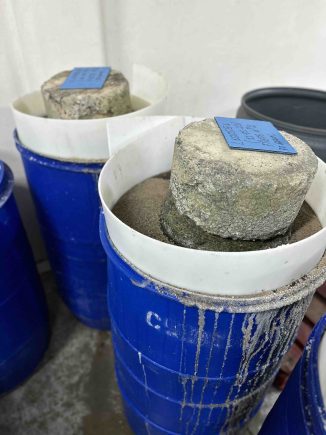
Anchovy fillets are salt cured and pressed by stone at Olasagasti’s facility in the Basque country
Olasagasti’s founder, Salvatore Orlando, was one of them. He came from Sicily to Getaria, in the Basque Country, and married a Basque woman named Simona Olasagasti. Three generations of the family carried that craft forward, and the company has been making anchovies since 1929.
When my wife Yelena and I visited the cannery, the smell of the curing rooms told the story before anyone explained it: layers of fish and salt, stacked and pressed, with time doing the work. After the cure, the fillets are cleaned by hand by the sobadoras, women with decades of experience who find hairline bones by touch that a machine would miss. Machine filleting is faster. It also leaves more bones, more skin, and less even fillets.
Brown Means Cold
Now the first question. Salt-cured anchovies are brown. That color comes from the year-long cure. Here is the rule we gave the buyers, and it is the most useful thing in this post:
If you open a tin and the anchovies are brown, they should have been refrigerated. No exceptions.
This is about quality, not safety. Kept warm, the salt keeps working on the flesh. The texture tightens and the flavor flattens. Everything the Cantabrian Sea gave that fish can be undone in a hot warehouse. In Spain and Portugal, cured anchovies sit in the refrigerated case even at ordinary grocery stores.
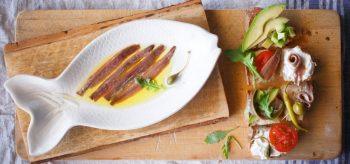
We import Olasagasti ourselves. We pick up at the cannery door on a refrigerated truck, ship in a refrigerated container, and keep them cold all the way to your door. We wrote about why in our guide on why almost everyone is ruining great anchovies.
White anchovies are a different product with different rules. Olasagasti Anchovies a la Basque are cooked in the tin and shelf stable. Nassari Boquerones are cured in vinegar and need refrigeration for safety. Each has its place, but neither is what this post is about.
Taste It Yourself
The clearest way to see merroir and fillet size at work is a side-by-side. Lay one fillet from the 48g tin and one from the 120g tin on good bread spread with cultured butter, like Rodolphe Le Meunier Beurre de Baratte. Nothing hides in that setup. Texture, fat, and salinity are all on display.
Shop Cantabrian Anchovies
Shop the Olasagasti 48g tin, the Olasagasti 120g tin of hand-selected large fillets, and the Olasagasti 1K chef tin in our stores or online. Every order ships insulated so the cold chain holds to your door.
We teach the full version of this story, with the tasting, in our anchovy class. Find the next one on our Classes & Events page → caputos.com/classes-and-events/.
Frequently Asked Questions
Why do salt-cured brown anchovies need to be refrigerated?
Salt-cured anchovies are brown because of their extended cure. If left at room temperature, the residual salt continues curing the fish, causing the delicate fats to break down, the texture to tighten, and the flavor to turn unpleasantly flat. Cold temperatures stabilize the cure.
What makes Cantabrian Sea anchovies different from Mediterranean anchovies?
The Cantabrian Sea is colder, rougher, and more nutrient-dense than the Mediterranean. Swimming against these strong currents and feeding on dense plankton blooms produces an anchovy with significantly higher muscle mass and fat content, ideal for an extended salt cure.
Why does the Olasagasti 120g tin cost proportionally more than the 48g tin?
The 120g tin is packed exclusively with hand-selected large fillets from the cannery’s biggest, primest fish. Larger fish have more fat and muscle structure, offering a substantially richer texture and deeper flavor compared to standard fillets.
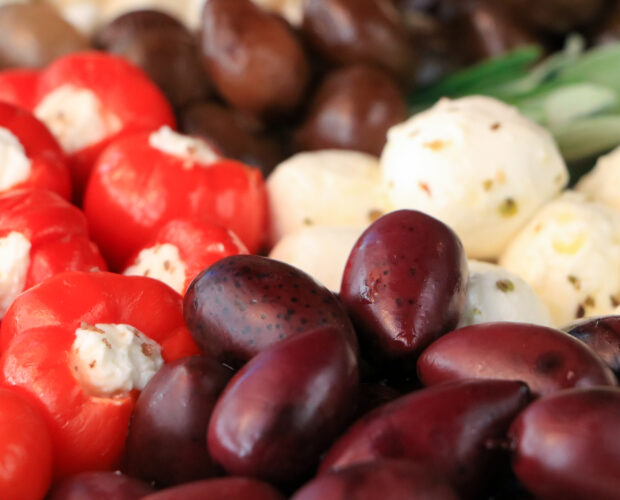
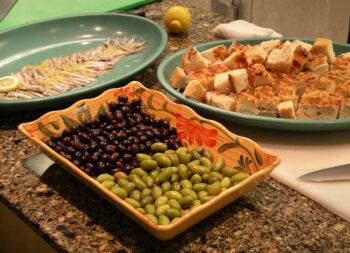
 For Kalamata olives with the pit, the Greek government recognizes 11 to 12 official size grades, based on how many olives fit into one kilogram. Fewer olives per kilogram mean the olives are larger.