
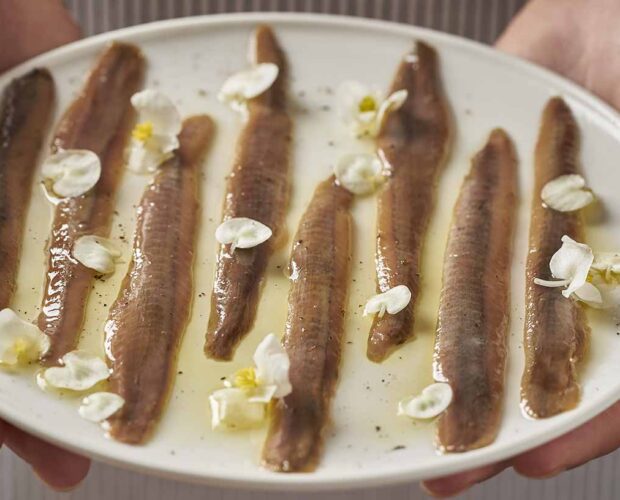
Anchovies have one of the worst reputations in food, and most of it is undeserved.
The real problem is not anchovies themselves. It is how they are handled, stored, and sold. In the United States, even genuinely excellent anchovies are routinely degraded long before they reach the kitchen. Importers, distributors, retailers, and consumers all play a role, often without realizing it.
The result is a category that many people think they hate, when what they actually dislike is mishandled fish.
The Biggest Misunderstanding About Anchovies
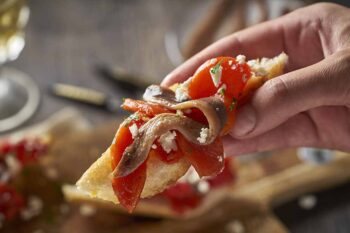 Not all anchovies are the same, and not all anchovies should be treated the same.
There are two fundamentally different traditions that most shoppers encounter:
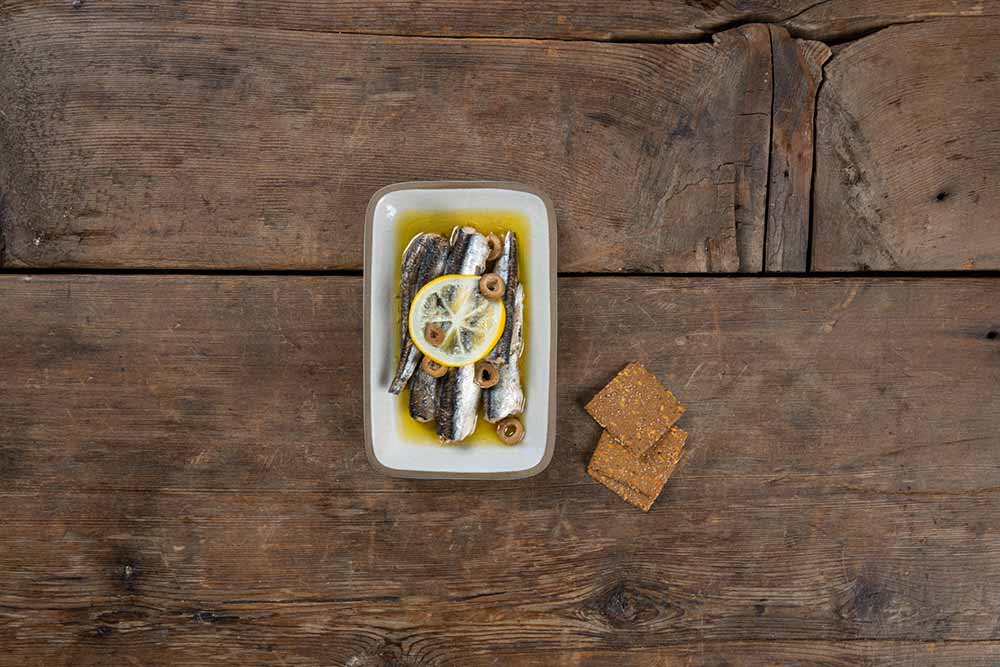
Cooked anchovies (white) are gently cooked in olive oil with aromatics. They eat more like small sardines and are often mistaken for them in both texture and color. These anchovies, like Anchovies a la Basque from Olasagasti, or widely available options such as Patagonia Provisions Roasted Garlic White Anchovies, are mild, tender, and shelf stable.
Salt-cured anchovies (brown) are never cooked. Whole fish are layered with salt, pressed under weight to encourage moisture loss, and cured slowly for over a year. Time, enzymes, and environment do the work. After curing, they are cleaned by hand, filleted, and packed in olive oil.
These two products look different. They taste different. And they require different care.
(There is a third style, boquerones, which are acid-cured rather than salt-cured and require refrigeration for food safety. That is a different product entirely and not what we are discussing here.)
Why Refrigeration Matters for Anchovies (And Why It’s Rarely Done)
Salt-cured anchovies are not unsafe without refrigeration. That is why U.S. regulations allow them to be sold shelf stable.
But safety and quality are not the same thing.
When cured anchovies are kept warm, the remaining salt continues to act on the flesh, effectively cooking it. Texture tightens. Flavor flattens. Months of careful curing are undone in days or weeks.
In Spain and Portugal, cured anchovies are routinely stored under refrigeration, even in basic grocery stores. This is not an affectation. It is an acknowledgment of how the product actually behaves.
In the U.S., refrigeration is rare because it is inconvenient and expensive. Most supply chains choose shelf stability over integrity.
This is also why so many people think cured anchovies are “just an ingredient” and too salty to eat on their own. When cured anchovies are mishandled and kept warm, salt continues to tighten the flesh and flatten flavor, turning what should be savory and balanced into something harsh. Properly handled, high-quality cured anchovies are not seasoning. They are a finished food.
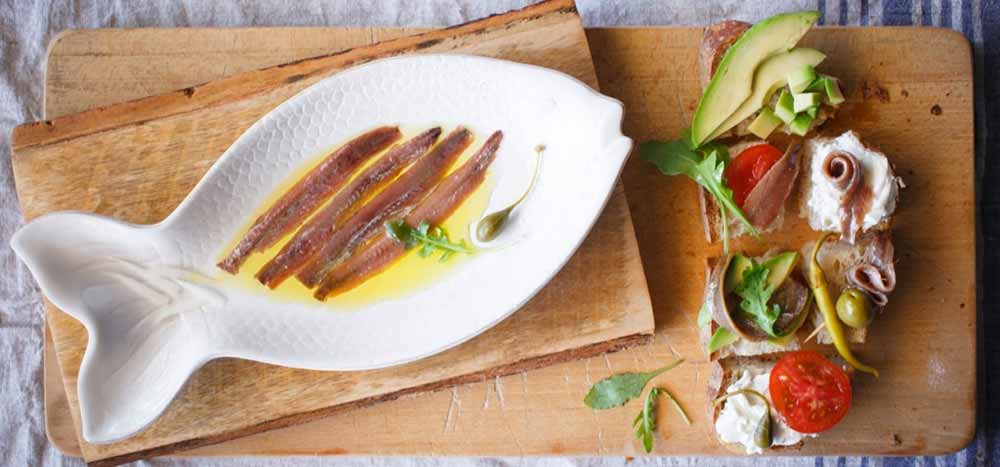
What Proper Anchovy Handling Looks Like
To experience cured anchovies as they are meant to be eaten, temperature matters from start to finish.
That means:
- Refrigeration after curing
- Refrigerated storage at the importer
- Refrigerated storage at retail
- Insulated shipping to the customer
This is why we import and handle anchovies ourselves, and why we maintain cold chain all the way to your door. We treat them more like cheese than canned tuna.
A Producer Who Makes the Distinction Clear
To understand why this care matters, look at producers like Olasagasti.
Founded by a Sicilian immigrant who brought Italian salting techniques to the Basque Country in the late 19th century, Olasagasti still produces both cured anchovies and cooked anchovies using distinct traditions.
Their salt-cured anchovies are deep, savory, and clean, designed to be used sparingly and with intention.
Their anchovies a la Basque are gently cooked, mild, and generous. If you didn’t know better, you might mistake them for small sardines. They are meant to be eaten as a dish rather than a seasoning.
When handled correctly, the difference is unmistakable.
The Ultimate Anchovy Test
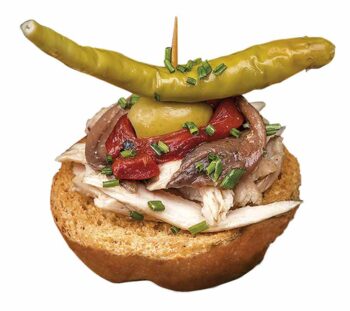 This is the simplest and most revealing way to understand anchovy quality.
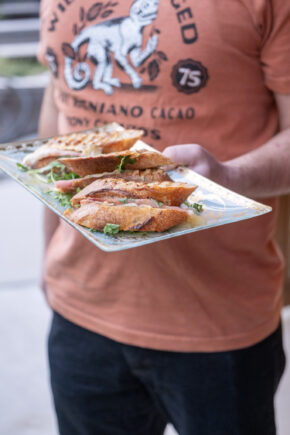
Buy the best and most freshly baked bread you can find. Toast it lightly if you like. Spread it generously with excellent butter. We suggest a cultured butter like Beurre de Baratte by Rodolphe Le Meunier, but any truly good butter will do.
Lay one or two cured anchovies across each half slice of bread.
That’s it.
You can add more or less anchovy to taste, but remember that a little goes a long way. In this setup, nothing hides flaws. Texture, salinity, aroma, and balance are all exposed. Great anchovies will taste savory, clean, and deeply satisfying. Poorly handled anchovies will not.
The Takeaway
Anchovies are not supposed to be aggressively fishy.
They are not supposed to be harsh.
They are not supposed to dominate every bite.
When they are cured patiently and handled with care, anchovies are one of the most precise and powerful ingredients in the kitchen.
The tragedy is not that people dislike anchovies.
It’s that so few have ever tasted them done right.


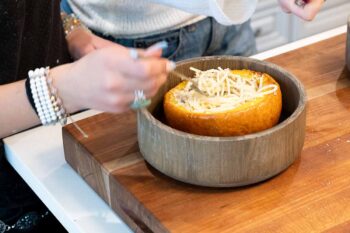 Frankie does not overthink things, and neither does this pasta.
 If truffle pasta shows Frankie’s authority, cake pops show her joy.
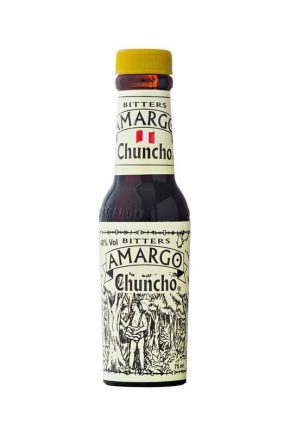
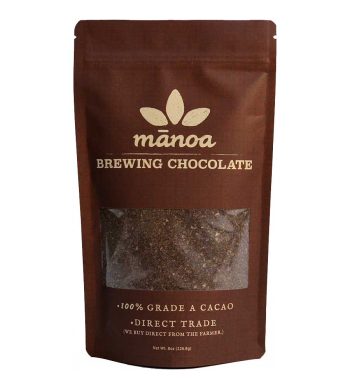
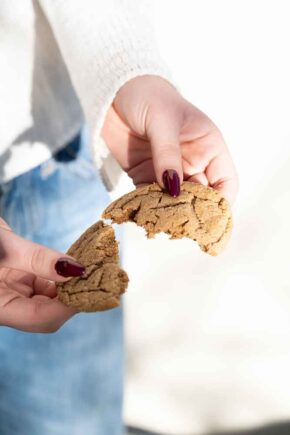 Gia brings curiosity, thoughtfulness, and precision to her cooking. She likes flavor that builds and lingers. Chai lattes are her favorite drink, so cookies with chai bitters feel exactly right for her.
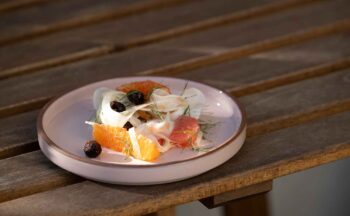 Every spread needs something that cuts through richness. This is Adri’s lane.

 Ingredients
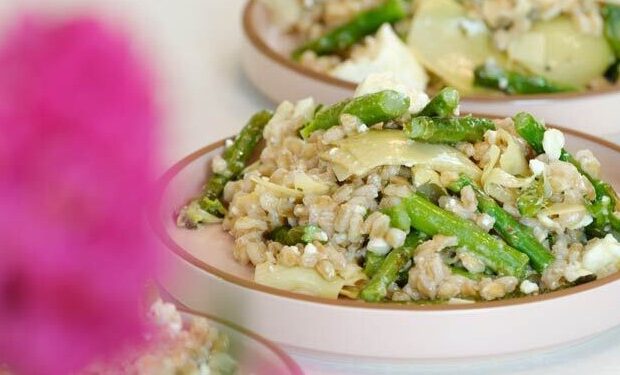
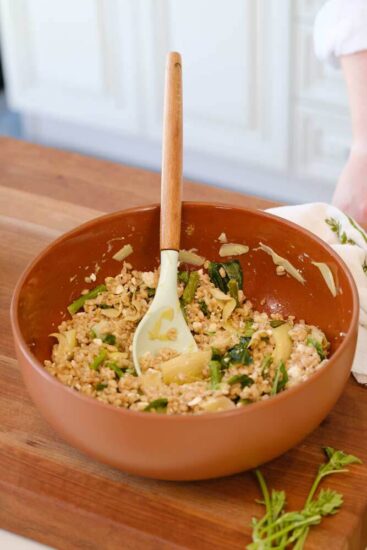
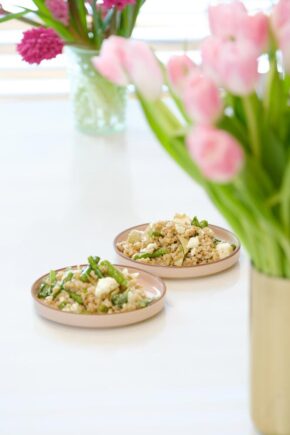 Heat oven to 450 degrees. Toss asparagus with olive oil, salt, and pepper. Spread onto a baking sheet and roast for 13 minutes. Remove to cool, then cut into 2 inch pieces.
 INGREDIENTS
 INGREDIENTS