A celebration of wild Amazonian cacao, community, and the people who protect both.
A Night For Wild Cacao
On November 20, Caputo’s hosted its 14th Annual Chocolate Festival, our yearly gala that centers on a single chocolate maker and the communities behind their cacao. This year, 250 guests filled our downtown market to honor Luisa Abram Chocolate from São Paulo, Brazil. Tickets sold out faster than any previous year.
From the moment guests stepped through the red entry doors into a space filled with Amazon inspired foliage, woven palm fans, and the glow of the Caputo’s neon, it was clear that the night was about more than sweets. It was about wild cacao, forest communities, and the long chain of people who protect both.

Why Luisa Abram Is Different
Luisa Abram and her family work exclusively with wild cacao from the Brazilian Amazon. This is not plantation cacao. It grows naturally in the forest, in complex ecosystems, and is harvested by ribeirinho river communities.
About ten years ago, during one of my nearly daily blind tasting sessions, a friend sent me a sample from a remote stretch of the upper Amazon called Juruá. At that time I had been a professional chocolate buyer for 15 years. I had tasted bars from hundreds of origins across Madagascar, Peru, and Brazil. This sample stopped me cold. The flavor profile was unlike anything I had experienced. It felt ancient and unfamiliar in the best way.
Later, USDA genetic testing confirmed what our palates already knew. The Juruá cacao represented a distinct genetic group from the upper Amazon, one that had not yet been documented in the broader cacao world.
It was clear that these beans needed support, so I agreed to import Luisa Abram Chocolate into the United States and Canada, and to help champion their mission. We saw not only exceptional flavor, but also a rare chance to support a supply chain that helped keep wild forest standing and rewarded the communities who gathered the cacao.
Saving Juruá During a Difficult Time
During the festival speech I shared a story that remains important to us. In 2020, in the middle of the pandemic, Luisa’s father André wrote to say that the Juruá cacao might not return. There had been two years of severe flooding. The cooperative that handled fermentation had failed to pay the harvesting community. Discouraged, they stopped collecting the cacao altogether.
For us, that was not acceptable. We had already seen what this origin meant for flavor and for preservation. Even while we faced our own challenges here in Salt Lake City, Yelena and I made a decision.
We told Luisa and her father André that Caputo’s would prepay for the next harvest. Not because it made financial sense in the short term, but because it was the only way to keep this origin alive. It would take well over a year for the beans to be collected, fermented, shipped, and turned into chocolate, but we committed up front. We also worked with them to establish a small fermentary within the community so that local people could control their own post harvest process.
That moment led to the Caputo’s Wild Juruá project, still one of the efforts we are proudest of. It shows how targeted support can help a fragile origin survive climate shocks and economic disruptions.
Tariffs and Headwinds
Toward the end of my speech I talked about a challenge that affects the entire Brazilian chocolate sector. Chocolate from Brazil currently enters the United States with a combined tariff load of roughly 56 percent. This creates a serious headwind for small producers like Luisa who already absorb high costs to work deep within the forest and support remote communities.
Right now Caputo’s is absorbing those tariffs for Luisa’s chocolate. We cannot do this for every producer, but in this case the preservation story and the significance of the work made the choice clear. We do not know how long we can continue, but we hope tariff relief eventually comes. Until then, every bar purchased and every event like this festival helps keep the project moving.
I invited guests to remember this when gifting chocolate this season. When people share Luisa’s bars, they support the Amazon and the communities who protect it.
The Room Falls Silent
When I stepped to the mic, the market was buzzing. Within seconds, the chatter faded. The crowd gave ten minutes of full attention.
I explained why buyers can become jaded when so many makers use the same set of origins, and I contrasted that with the shock of tasting Juruá for the first time. I talked about the genetic testing, the floods, the prepayment decision, and the fermentary. I also explained a crucial distinction. Cacao from the wilds of the Amazon grows in standing forest and supports ribeirinho communities. In other parts of Brazil, cacao has a very different land history and follows different models. Both may carry the word “Brazil,” but their stories diverge.
When I invited Luisa to join me and asked for a warm Salt Lake City welcome,
t
he applause was immediate and strong. Luisa had tears in her eyes. Her sister Andrea, who serves as both business partner and co-creator in the venture, stood beside her. Luisa thanked the crowd and said the evening felt like a powerful endorsement of their work and the communities they partner with.
A Menu That Followed the River
This year’s printed menu followed the meandering line of the Juruá River, a nod to both the Wild Juruá packaging and the long journey from forest to plate. Guests unfolded it at the entrance and traced the flow from dish to dish.
Caputo’s Welcome and Farewell
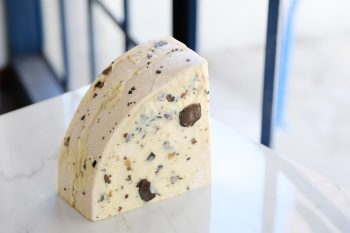
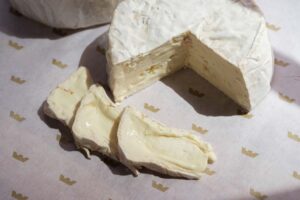
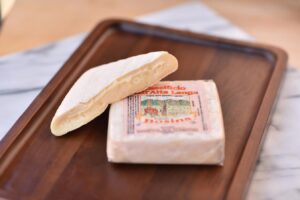
Caputo’s own Marian McKenny created three dishes built on Wild Juruá and our Grotte Caputo cheese.
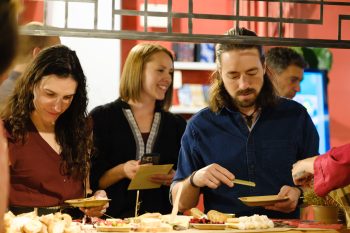
- Guests entered with warm Grotte Caputo cheese bread dipped in melted Wild Juruá. It set the tone and earned many “favorite bite” comments.
- Later, Marian served a Wild Juruá and beef ragu with Rustichella tagliatelle.
- As a final gesture, she closed the night with Wild Juruá brigadeiros topped with shaved chocolate and gold leaf.
Cosmica and Jambu Flower Chocolate
Cosmica, fresh from their New York Times “50 Best Restaurants” recognition, sent chef Zach Wade. With support from industry veteran Zach Pelaccio, they delivered a Jambu Flower Wagyu short rib over soft polenta with cavolo nero. The demi-glace incorporated Jambu Flower Dark Chocolate, known for a natural tingling sensation found in certain Amazonian botanicals.
Nomad East, St. Regis, and Arlo
- Nomad East offered duck confit glazed in a passion fruit and cacao jerk sauce built with Passion Fruit White Chocolate.
- St. Regis presented a strawberry goat cheesecake with Strawberry White Chocolate. The chocolate opened up the clean, vegetal qualities of the chèvre without adding sweetness.
- Arlo brought Double Dutch Carrots, a savory composition resting over Purus Dark Chocolate, showing how cacao can support a vegetable plate without becoming dessert.
Cocktails With a Sense of Place
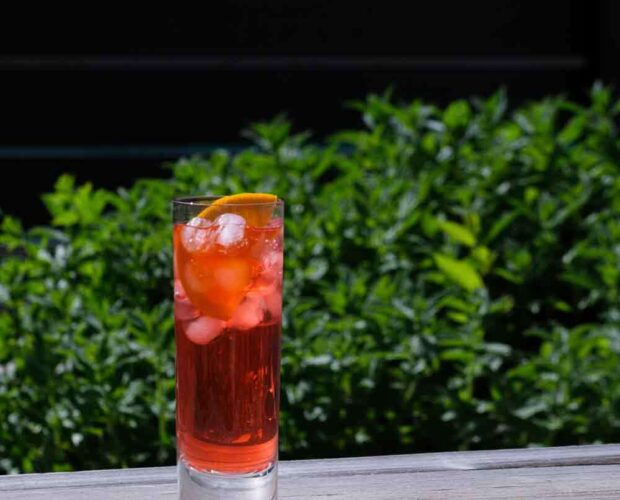
Two cocktails captured the most attention.
- Buzzy Lou, by Sabrina Madsen of Cosmica, used a reduction of Jambu Flower Chocolate with gin, vermouth, and citrus. Guests noticed the characteristic Jambu tingle immediately.
- Açaí Bowl, by Crystal Daniels of Caputo’s, transformed a breakfast classic into a cocktail using rum, açaí, and a chocolate coated granola garnish.
The Amazon in Salt Lake City
In one corner of the market, our team built a full foliage wall with tropical flowers, large leaves, and a suspended red canoe. Guests took photos inside the canoe with paddles, prop machetes, and cutouts of Luisa’s face.
One of the best moments came when Luisa stood in the canoe surrounded by guests all holding her face on sticks. It captured the mix of humor, affection, and genuine admiration that carried the night.
Samba, Frankie Caputo, and the Finale
As the evening progressed, musicians from Samba Fogo filled the market with live Brazilian music. Dancers in full feathered regalia moved through the crowd.
Luisa stepped into the circle right away. Frankie Caputo joined her. Guests formed a ring around the dancers, then slowly merged into one big group. For a few songs the entire market felt like an outpost of the Amazon.
After the Guests Went Home
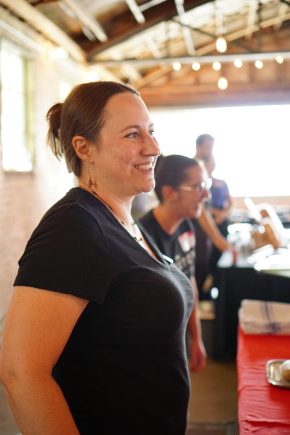
When the last guests drifted out into the November night, our staff and volunteers transitioned into cleanup. It was late, but the mood remained upbeat. People worked quickly, chatted across stations, and laughed while breaking down the space.
When everything was cleared, the Caputo’s and A Priori crews gathered in the dining room. Someone opened a bottle of wine. A few remaining cocktails went around. It felt more like the close of a family event than the end of a large production.
Gratitude
This festival runs on generosity. Chefs and bartenders donate significant time. Volunteers and staff contribute a full night of effort. Guests buy tickets not only to enjoy a special evening, but to support the protection of heirloom cacao.
All proceeds support the Heirloom Cacao Preservation Initiative, which documents and protects cacao varieties of cultural and historical value. We are honored that the 14th Annual Chocolate Festival could highlight the work of Luisa Abram and the ribeirinho communities of the Amazon.
We already look forward to next year.

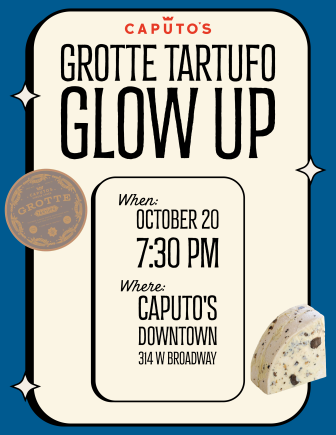
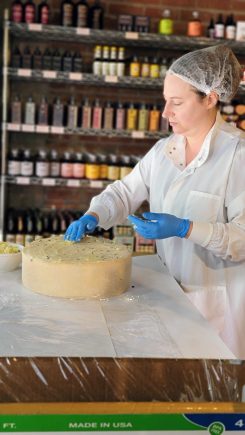
Our next Industry Night, happening Sunday, October 20th at Caputo’s Downtown, will shine the spotlight on Antonia Horne, affineuse of